

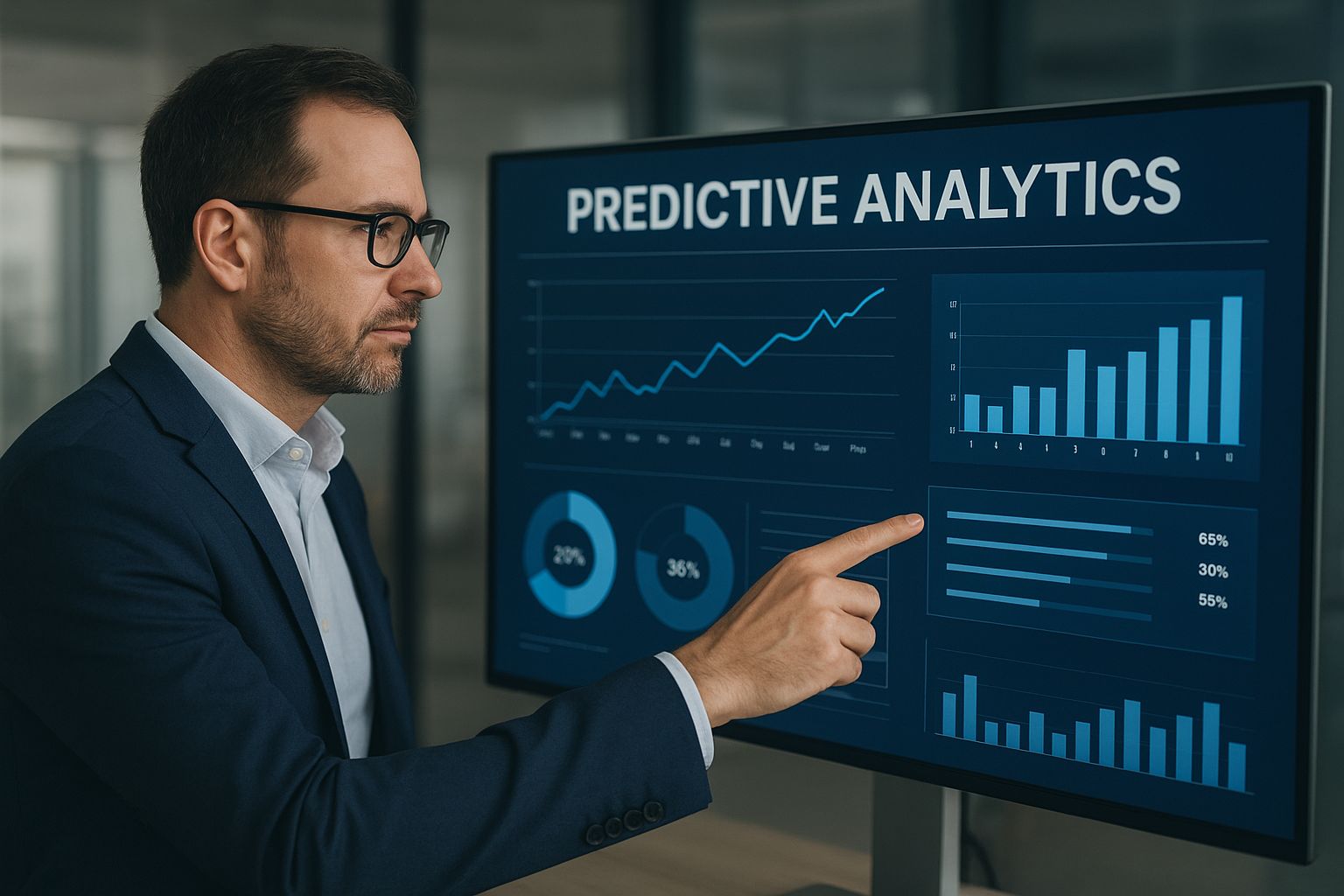
In today’s rapidly evolving business ecosystem, Chief Marketing Officers (CMOs) are increasingly turning to predictive analytics to transform their marketing strategies. This trend is gaining traction as businesses recognize the profound influence data-driven insights can have on maximizing marketing ROI and ensuring competitive advantage.
Predictive analytics utilizes historical data to forecast future trends, customer behaviors, and marketing outcomes. CMOs leverage this powerful tool to fine-tune strategies, improve customer engagement, and accurately measure the effectiveness of marketing campaigns. As a consequence, marketing departments are seeing a significant enhancement in their decision-making processes.
A prime example of the successful deployment of predictive analytics comes from a major retail giant, which used data-driven insights to overhaul its entire marketing approach. By analyzing customer purchase patterns, the company was able to predict upcoming product demands and adjust inventory levels accordingly. This led to not only an increase in sales but also a reduction in waste, illustrating how predictive analytics can align marketing with broader business goals.
Moreover, companies are investing heavily in marketing technology (MarTech) stacks that incorporate sophisticated analytics tools. According to recent studies, over 70% of organizations now recognize the essential nature of predictive analytics in their marketing arsenal. This change reflects an understanding that traditional methods are no longer sufficient to keep pace with the accelerated digital transformation landscape.
Yet, as firms embrace these sophisticated technologies, integration challenges often arise. A critical area of focus is ensuring seamless integration of predictive analytics systems with existing customer relationship management (CRM) platforms. Organizations must prioritize interoperability and data quality to derive actionable insights effectively. As a result, there’s a growing market for MarTech solutions that can plug smoothly into legacy systems while offering robust data analytics capabilities.
In addition to technological integration, there is an increasing emphasis on talent acquisition. Companies are on the lookout for data-savvy marketers who can interpret complex analytics and align them with strategic objectives. Training programs and partnerships with analytics firms are becoming commonplace as businesses seek to bridge the skills gap in their marketing teams.
Predictive analytics is set to redefine the marketing roadmap, steering it towards a future characterized by hyper-personalization and precision targeting. By tapping into the potential of these insights, CMOs can anticipate market shifts, craft nuanced campaigns, and ultimately, drive tremendous value.
As this trend becomes more entrenched, it will be crucial for marketing leaders to champion a culture of data literacy within their teams. Empowering employees to understand and utilize data will be vital in leveraging these insights for sustained growth and innovation.