

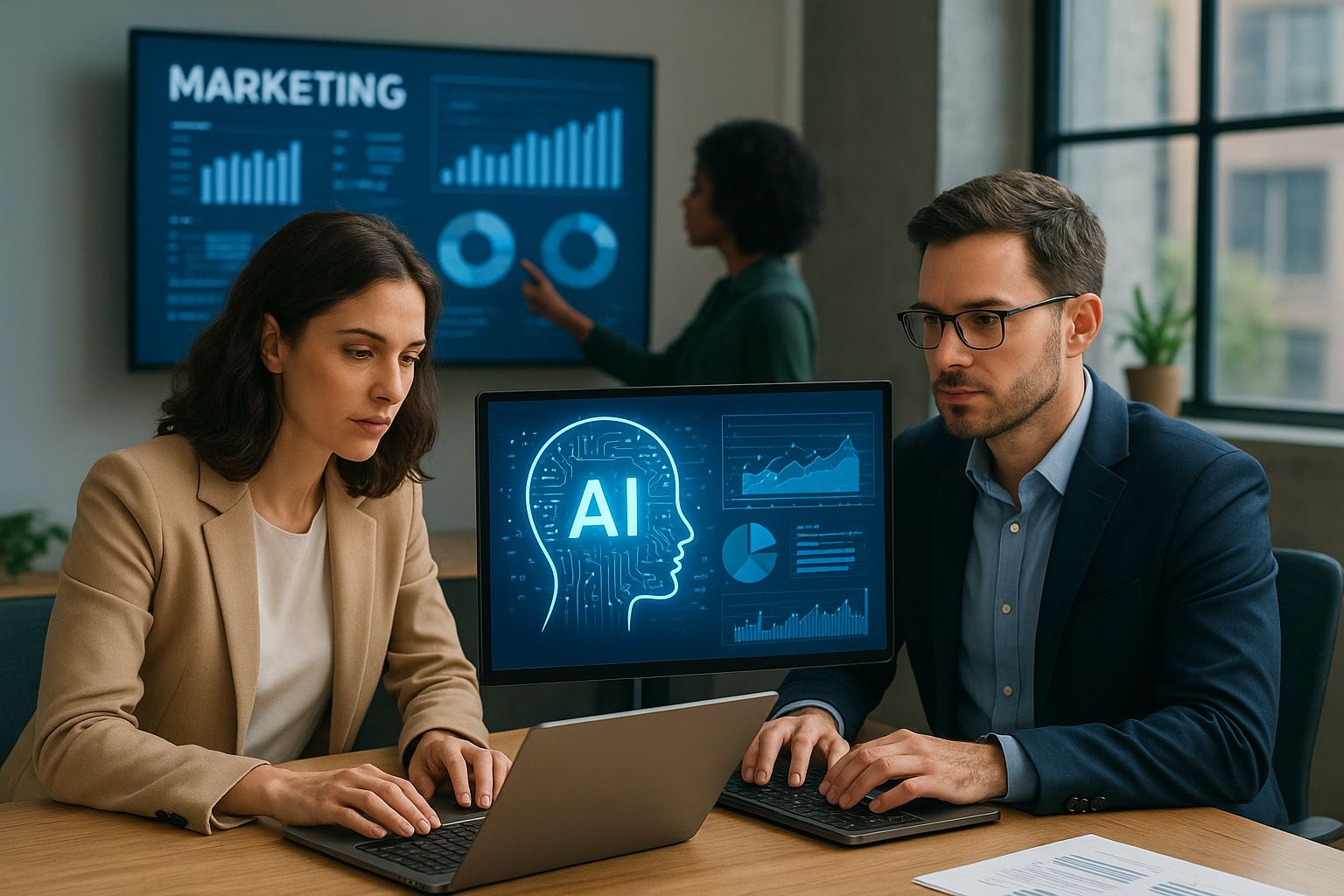
As digital landscapes become increasingly dynamic, marketing departments are continually seeking innovative solutions to streamline their operations and enhance consumer engagement. One significant trend reshaping this industry is the integration of Artificial Intelligence (AI) into marketing strategies.
AI tools are inherently designed to process vast amounts of data at speeds unattainable by human efforts, allowing marketing teams to analyze consumer behavior with precision and refine their strategies accordingly. AI’s data processing capabilities facilitate personalized marketing, enabling brands to offer tailored experiences that cater to the unique preferences of individual consumers. This level of customization not only boosts customer satisfaction but also cultivates brand loyalty.
Furthermore, AI-driven platforms are revolutionizing aspects such as content creation and distribution. Natural language processing technologies can generate personalized content that resonates with target audiences, while AI algorithms determine the optimal timing and channels for content delivery, maximizing reach and engagement.
Another critical implementation of AI within marketing is in predictive analytics. By examining historical data, AI can forecast future consumer trends, allowing businesses to proactively adjust their marketing strategies to align with emerging patterns. This capability reduces risks associated with sudden market shifts and fosters a more proactive approach to strategy development.
However, integrating AI into marketing does come with its set of challenges. Chief among these are data privacy and ethical considerations. Marketers must navigate the complex web of data privacy laws to ensure compliance while utilizing AI technologies. This challenge necessitates a robust legal and ethical framework to govern the use of consumer data, thereby protecting consumer interests while leveraging AI for strategic gains.
Several leading companies have already embraced AI to enhance their marketing efforts. For instance, tech giant IBM uses AI to analyze and predict market trends, guiding its marketing strategies and ensuring they remain at the forefront of innovation. Similarly, e-commerce platforms employ AI-driven recommender systems, which personalize product suggestions and significantly enhance the shopping experience for consumers.
In conclusion, the intersection of AI and marketing signifies a transformative period for the industry. By leveraging AI’s capabilities, marketers can create more effective, data-driven strategies that align with consumer needs, inherently boosting brand visibility and customer engagement. However, striking a balance between technological advancement and ethical responsibility will remain crucial as AI continues to evolve in the marketing domain.